
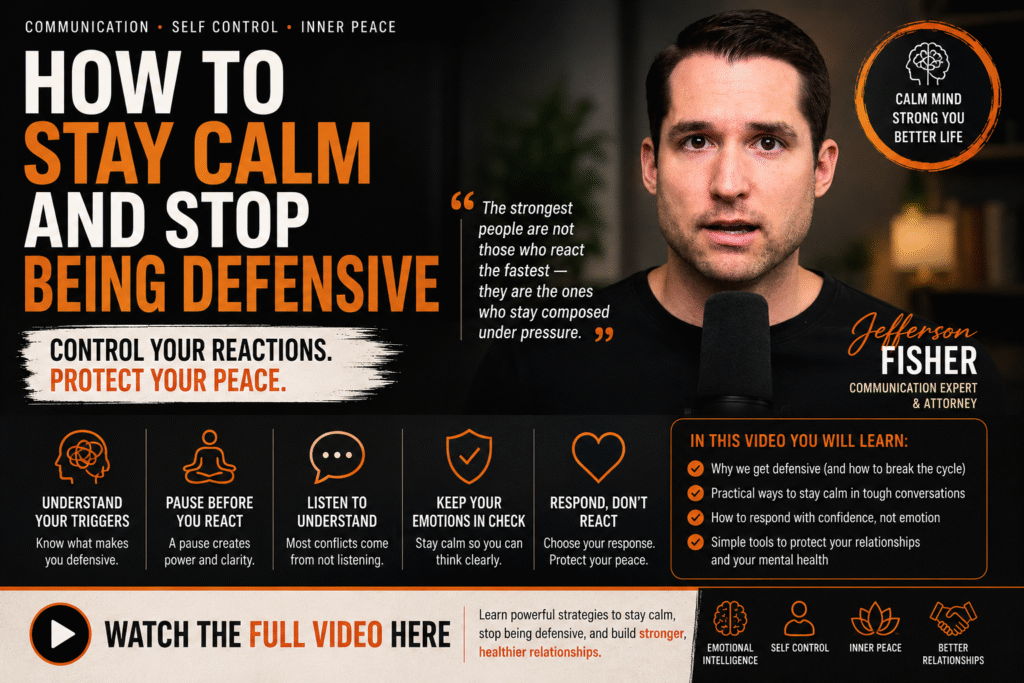
We live in a world where people react quickly to almost everything. A small comment, criticism, or misunderstanding can instantly turn a normal conversation into tension or conflict. In many situations, people are not responding to what was actually said — they are reacting emotionally to how it made them feel.
Learning how to stay calm and stop being defensive is becoming one of the most valuable life skills today.
Many people think defensiveness is a sign of strength because it feels like protecting yourself. In reality, constant defensiveness often creates more misunderstandings, damages relationships, and increases stress. Emotional reactions may feel natural in the moment, but they rarely improve communication.
One of the most interesting ideas shared by Jefferson Fisher is that calmness is not weakness. Staying calm during difficult conversations actually requires emotional control, confidence, and self-awareness.
The strongest people are not always the loudest in the room. They are often the people who can stay composed when emotions rise.
Defensiveness usually comes from feeling judged, attacked, misunderstood, or emotionally unsafe. When someone disagrees with us, our brain sometimes interprets it as a personal threat rather than a simple difference in opinion. This is why many conversations escalate so quickly.
However, emotionally intelligent people learn how to pause before reacting.
That pause matters more than most people realize.
A few seconds of reflection can prevent arguments, hurtful words, and unnecessary stress. Calm people understand that not every comment deserves an emotional reaction. Sometimes the best response is clarity, not confrontation.
Another important lesson is learning to separate criticism from identity. Receiving feedback or hearing a different perspective does not automatically reduce someone’s value or intelligence. People who are secure in themselves do not feel the need to defend every opinion or prove themselves constantly.
Communication also changes when people focus on understanding instead of winning. Many arguments become worse because both sides are trying to defend themselves rather than actually listening. Real communication happens when people try to understand emotions, intentions, and perspectives before reacting.
This mindset can improve every area of life:
relationships,
friendships,
leadership,
family conversations,
work environments,
and even social media interactions.
Staying calm does not mean ignoring emotions. It means managing emotions wisely instead of allowing them to control behavior.
One of the most powerful habits anyone can develop is learning how to respond instead of react. Reactions are emotional and impulsive. Responses are thoughtful and intentional.
That difference can completely transform relationships and communication.
In a world full of noise, emotional reactions, and constant tension, calmness has become a rare form of strength. People who master emotional control often create healthier relationships, better communication, and stronger self-confidence.
Inner peace is not built by avoiding difficult conversations.
It is built by learning how to navigate them calmly.
🎥 Watch the full video here:
Discover practical lessons from Jefferson Fisher about emotional intelligence, communication, self-control, and how to stop being defensive in difficult conversations.
#EmotionalIntelligence #SelfControl #StayCalm #Mindset #CommunicationSkills #PersonalGrowth #InnerPeace #SelfDevelopment #Leadership #PositiveMindset #ConflictResolution #MentalHealth #GrowthMindset